
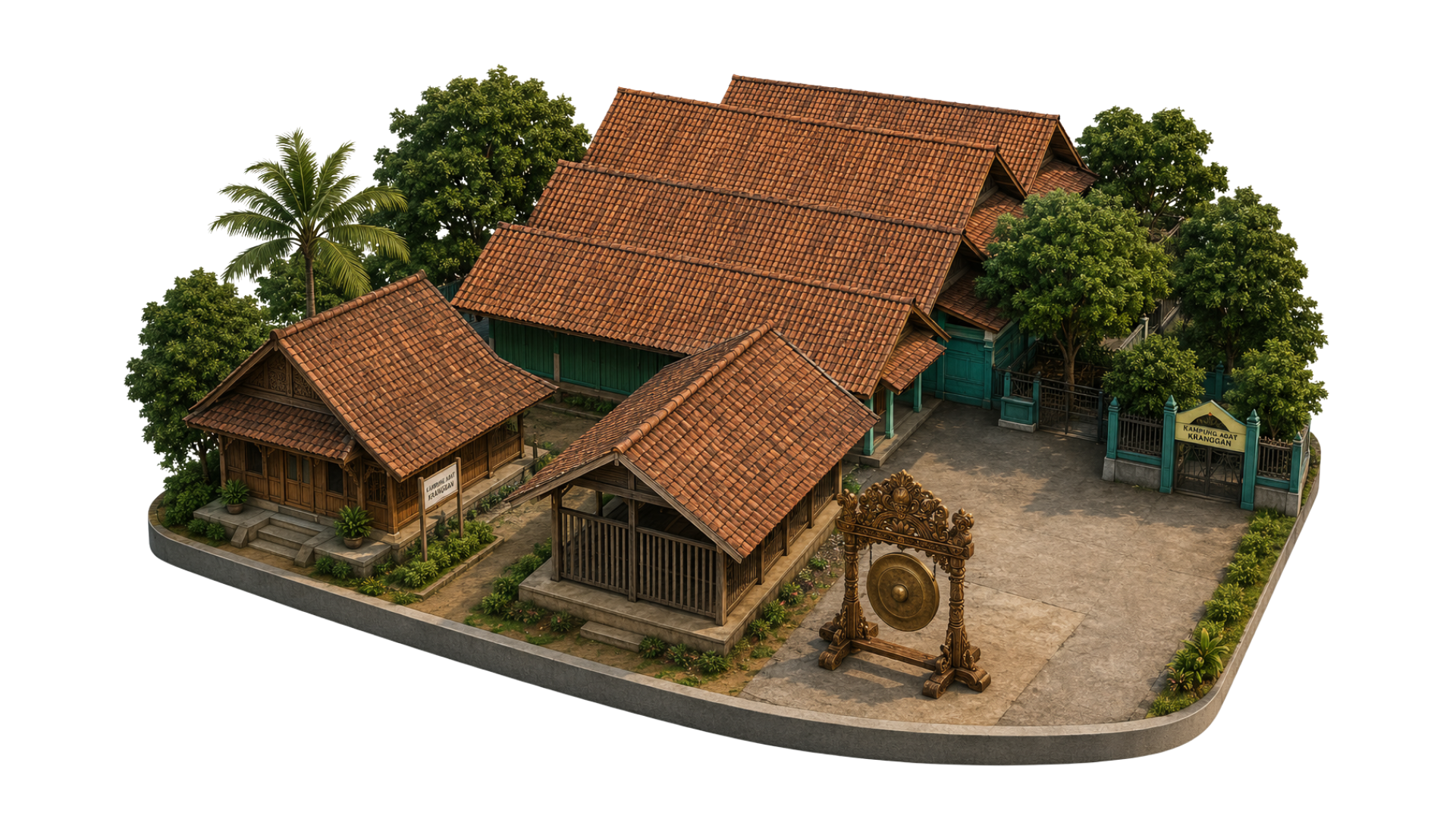
For three days each August, a small kampung on the southeastern edge of Bekasi becomes the loudest place in the city—not with speakers, but with hand drums, coconut-smoke, and songs that predate the city itself.
Kampung Adat Kranggan doesn’t appear on most weekend itineraries. It sits about forty minutes from the Summarecon skyline, past traffic-choked ring roads and half-finished apartment blocks, until suddenly the road narrows and the concrete gives way to bamboo. What you find at the end of that road is a village that has quietly refused to be a suburb.
Not preserved—practiced.
For decades, the elders of Kranggan have maintained a ritual calendar that most of Bekasi has never heard of. Sedekah Bumi, the annual harvest thanksgiving, is not a performance for outsiders. It is a living choreography—prayers, offerings, a communal meal that must be cooked in the same wood-fired pots the village has used since anyone can remember.
“We are not a museum. We are a village that still prays with the season.”

A quiet return
Something has been shifting in the last two years. Younger residents—many of them born in Jakarta apartments, not in the kampung itself—have started asking to attend. Some come to film. Others come to learn the drum patterns. A few, quietly, come to help cook.
The elders don’t frame this as a revival. They frame it as continuity. The ritual, they say, never left. Bekasi just wandered for a while, and is finding its way back.
On the last night of the ritual, the whole kampung eats together in the courtyard, and the drums keep going long after the food is gone. If you have never sat under a bamboo roof at midnight, listening to a song your grandmother might have known, this is where you start.